

















Recent Developments in Incidents at Sea
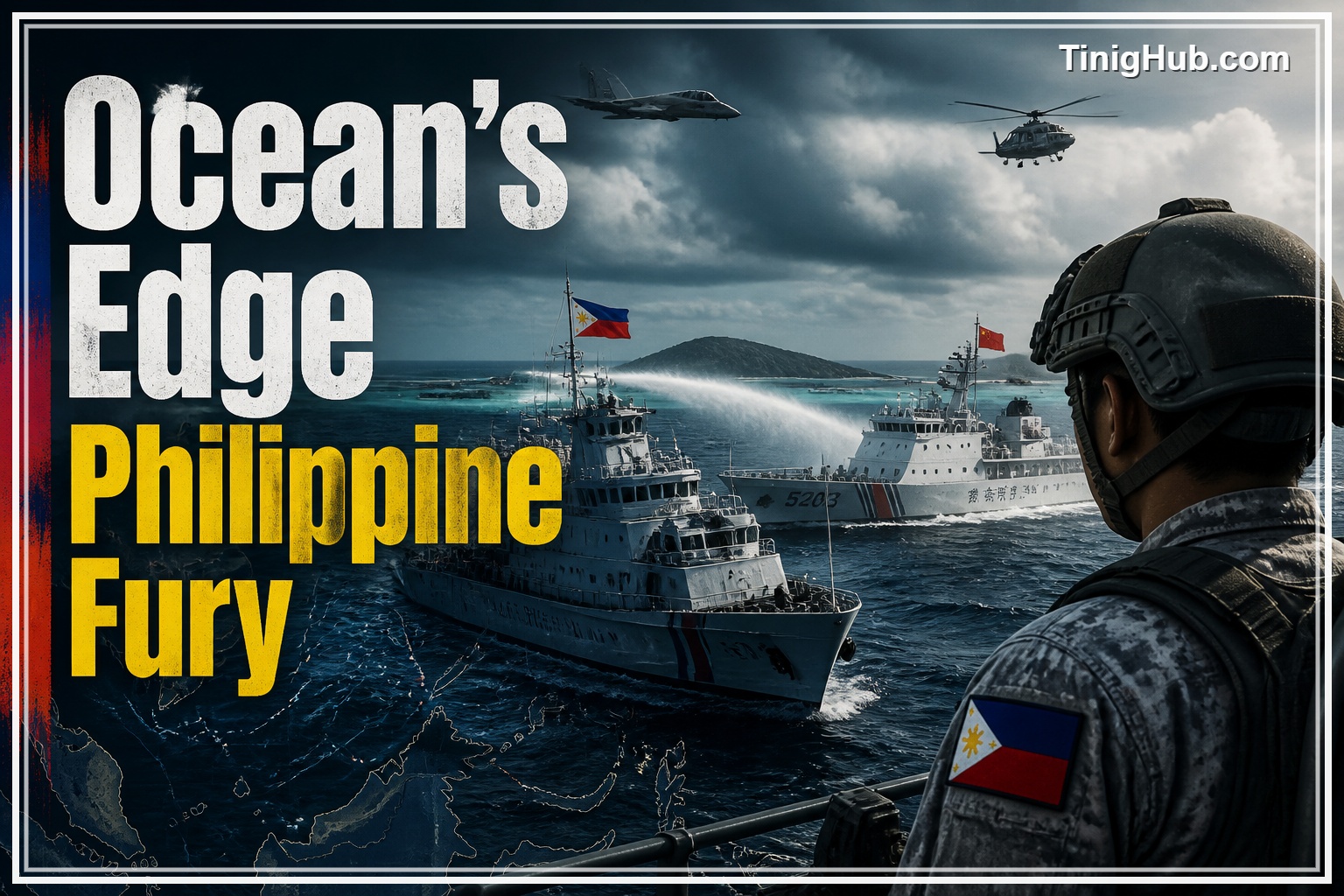
In recent years, the South China Sea has witnessed a significant escalation of disputes involving the Philippines, with a string of direct maritime confrontations. These incidents have mainly occurred near Second Thomas Shoal and Scarborough Shoal, both sites of overlapping territorial claims in the region. Chinese Coast Guard ships have reportedly used aggressive tactics, including the use of water cannons and dangerous maneuvers that resulted in collisions with Philippine supply ships. In July 2026, a Filipino sailor was injured in a scuffle near Second Thomas Shoal in a notable incident. These recurring clashes point to a sharp increase in operational friction in these contested waters.
Philippines’ Aggressive Legal and Diplomatic Posture
The Philippines has responded with a more aggressive legal and diplomatic strategy. One of the major steps was the formal submission in July 2026 of an extended continental shelf (ECS) claim for the West Palawan area to the United Nations Commission on the Limits of the Continental Shelf (CLCS). The filing, which came after an initial deposit in June 2024, is seeking international recognition of Manila’s rights to seabed resources outside its 200-nautical-mile exclusive economic zone. At the same time, the Philippines deposited an official nautical chart of Bajo de Masinloc (Scarborough Shoal) with the UN to reinforce its maritime entitlements under international law. They also often refer to the 2016 Permanent Court of Arbitration ruling, which greatly diminished China’s sweeping “nine-dash line” claims, a ruling Beijing still refuses to recognize. Manila has also played a strategic game of “assertive transparency,” releasing videos and documenting Chinese activities in a bid to win international support for its position.
China’s Retaliation and Military Moves
China’s multifaceted reactions to the Philippines’ diplomatic and operational assertiveness have been varied. Beijing has openly rejected the Philippines’ ECS claim, formally asking the UN to disregard it, saying the submission violates Chinese sovereignty. In early August 2026, China conducted joint naval and air drills near Scarborough Shoal in a clear show of its resolve. These drills were described publicly as “necessary actions” to counter perceived threats to regional peace and stability posed by “certain countries.” Furthermore, in August 2026, China promulgated new management measures for what it refers to as the “Huangyan Dao National Nature Reserve” (Scarborough Shoal). They ban fishing, mining and coral extraction without permission and show an intention to exercise administrative control over the disputed feature. China also accused the Philippines of “infringing and provocative actions” and of violating an alleged provisional understanding on resupply missions to the BRP Sierra Madre at Second Thomas Shoal.
Strengthening International Alliances of Philippines
The Philippines has been building up its strategic alliances amid rising tensions, especially with the United States and Japan. That has led to more access to U.S. bases, a jump in joint military exercises and transfers of defense equipment. Notably, joint U.S.-Philippines-Japan maritime drills were conducted in July 2026, indicating a growing trilateral security cooperation. The United States has reaffirmed that its Mutual Defense Treaty with the Philippines applies to the armed forces, public vessels and aircraft of both countries operating in the South China Sea. Japan has also deepened its engagement through the provision of military equipment to the Philippines, enhancing its maritime security capabilities. Separately, Japan and the Philippines are engaged in discussions to delineate their maritime boundary , a sign of a shared commitment to international legal regimes in addressing maritime claims. Such alliances are a sign of a collective effort to push back against what is perceived as unilateral assertion in the South China Sea.
Threats to regional stability and international law
“The continued escalation of conflicts has serious implications for regional stability and the effectiveness of international law.” The South China Sea is a volatile flashpoint, but it is also acknowledged as a critical global trade route with significant untapped natural resources. The Philippines has always pursued a Code of Conduct with ASEAN and China to manage disputes, but the current climate of heightened tensions indicates that reaching a consensus on a framework is still difficult. China’s ongoing defiant behavior and aggressive actions, in violation of the 2016 arbitral ruling, directly challenge the United Nations Convention on the Law of the Sea (UNCLOS) and the principle of a rules-based international order. Not resolving these disputes diplomatically risks further erosion of international legal norms, and could spark destabilizing arms buildups in the region.