


















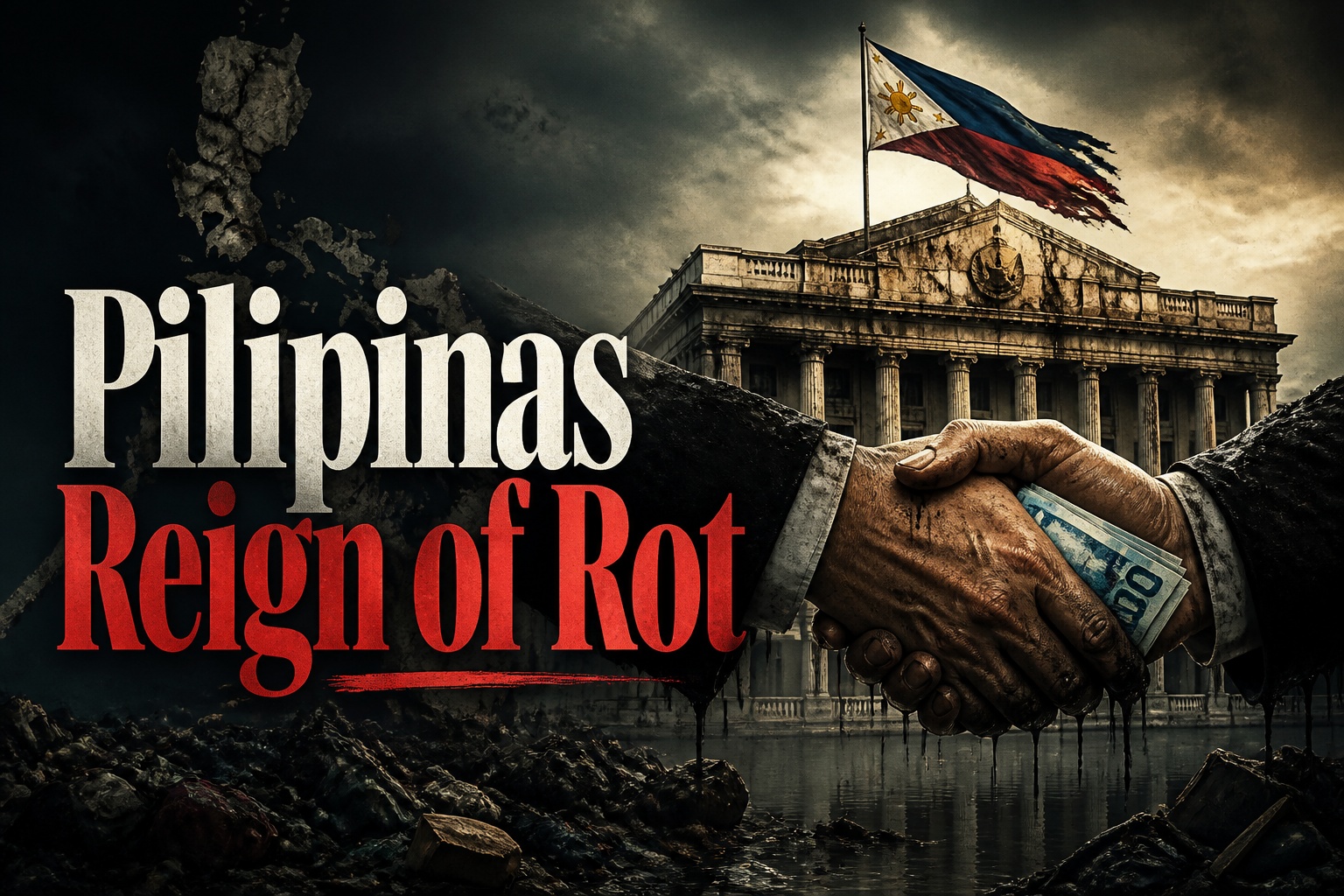
A worrying drop in the world rankings
If you’ve been watching the news, you may have caught some disturbing news about corruption in the Philippines. That is a topic that comes up a lot in conversation and rightly so. According to the latest data from Transparency International, the Philippines is not doing well in the fight against public sector corruption. In 2025, the country ranked 120 out of 182 countries on the Corruption Perceptions Index (CPI) with a score of 32 out of 100, indicating a relatively low level of corruption. This is actually down from its score of 33 in 2024, which was a slight regression from 34 in 2023. The Philippines score is much lower than the average of the region to which it belongs (Asia Pacific, which is 44) and even the global average of 43. This is not a new trend either. The country’s score has basically bounced between 33 and 36 for more than a decade, suggesting little progress in tackling perceived corruption.
The huge flood control scandal
One of the biggest stories in headlines lately has been the huge corruption scandal surrounding flood control projects. It has really brought the question of graft to the front of public debate. Tens of thousands of Filipinos marched through the streets of Manila in September 2025 in what was called the “Trillion Peso March” to protest government corruption. The public outrage reached a climax in July 2025 when a series of tropical storms pounded the country, exposing the ineffectiveness of the flood infrastructure, despite billions of dollars supposedly spent on it. Of course, people were asking where all that money went, especially when thousands of homes were damaged and many lives lost.
Government reaction and further investigations
In the face of mounting outrage, President Ferdinand “Bongbong” Marcos Jr. pledged to investigate corruption. In September 2025 he even signed an executive order to create an Independent Commission for Infrastructure to investigate irregularities in government infrastructure projects. A total of $9 billion in flood control contracts went to just 15 companies, triggering accusations that corrupt officials were working with contractors to inflate costs and steal public money. Some high-profile figures have already been thrown into the spotlight by the scandal, such as former Senate president Francis Escudero and the president’s cousin former House speaker Martin Romualdez who both stepped down from their leadership posts in September 2025. As of June 2026, the Ombudsman has more than 200 complaints under investigation in connection with this public works corruption scandal and some people, including Senator Jinggoy Estrada, have even faced court cases. As recently as June 2026 protests for accountability continued.
Corruptions root causes
So why does corruption seem to be such a chronic problem in the Philippines? Well, it’s complicated, but a lot of it is really systemic problems that have been there a long time. Often blamed are political dynasties and the so-called “padrino system” – where favors, promotions or appointments are given based on family ties or friendships and not merit. This effectively allows for the monopolization of political power and can even help politicians facing corruption charges to be re-elected and escape accountability. Other factors are low salaries of public officials, red tape, low risk of being actually caught and punished for corrupt acts and even some cultural values, such as family loyalty. The system creates a lot of opportunities for corruption, with the perception of little risk of getting caught, which makes it a very attractive path for some.
The High Price to the Nation
The effects of all this corruption are staggering, affecting just about every aspect of life in the Philippines. It is a huge economic drag, diverting precious resources, scaring foreign investors and blocking the development of desperately needed infrastructure. It also greatly diminishes the government’s credibility and undermines public trust and democratic institutions, which can result in political instability. The financial losses are huge. Some estimates show that some ₱8.8 trillion was lost to graft, ghost projects and elite capture in just the past decade (2016-2025). That’s a staggering amount, larger than the entire national budget for 2026! The massive leakage of funds also contributes to the country’s ballooning debt, which is projected to reach ₱19.143 trillion by the end of 2025. We have even seen how corruption-driven practices can slow down economic growth. The significant contraction in public construction in 2025 is evidence of this, with research groups saying it points to systemic tolerance of ghost projects and overpricing. Ultimately, it means less money for essential services such as education, health and assistance to farmers, which impacts the quality of life of ordinary Filipinos.
Efforts to change the course
But it’s not all doom and gloom. The Philippines is still fighting a war on graft. For instance, the Office of the Ombudsman has a three-pronged approach to holding public servants accountable—punitive measures, preventive strategies, and promotional activities—backed by its constitutional mandate. Bantay-Korapsyon programs aim to raise awareness, reduce chances of corruption, and increase chances of catching those who commit corrupt acts. There have also been legislative attempts, such as the New Government Procurement Act signed in July 2024, which aims to usher in a new era of corruption-free procurement. Civil society organizations and the media also play an important role in advocating for transparency and accountability.
A long road in front
All these are important steps, but the road to a truly corruption-free Philippines is long and arduous. The endemic, systemic corruption, the recent slide in global rankings, and the current high-profile scandals show that the country is at a critical juncture. It is a continuing fight against entrenched practices but with relentless pressure both from government and an informed citizenry there is hope that the tide can be turned eventually.